






Angelina Jolie : in love de la France !
- Détails
- Publié le jeudi 11 avril 2013 10:46
- Écrit par Gossy
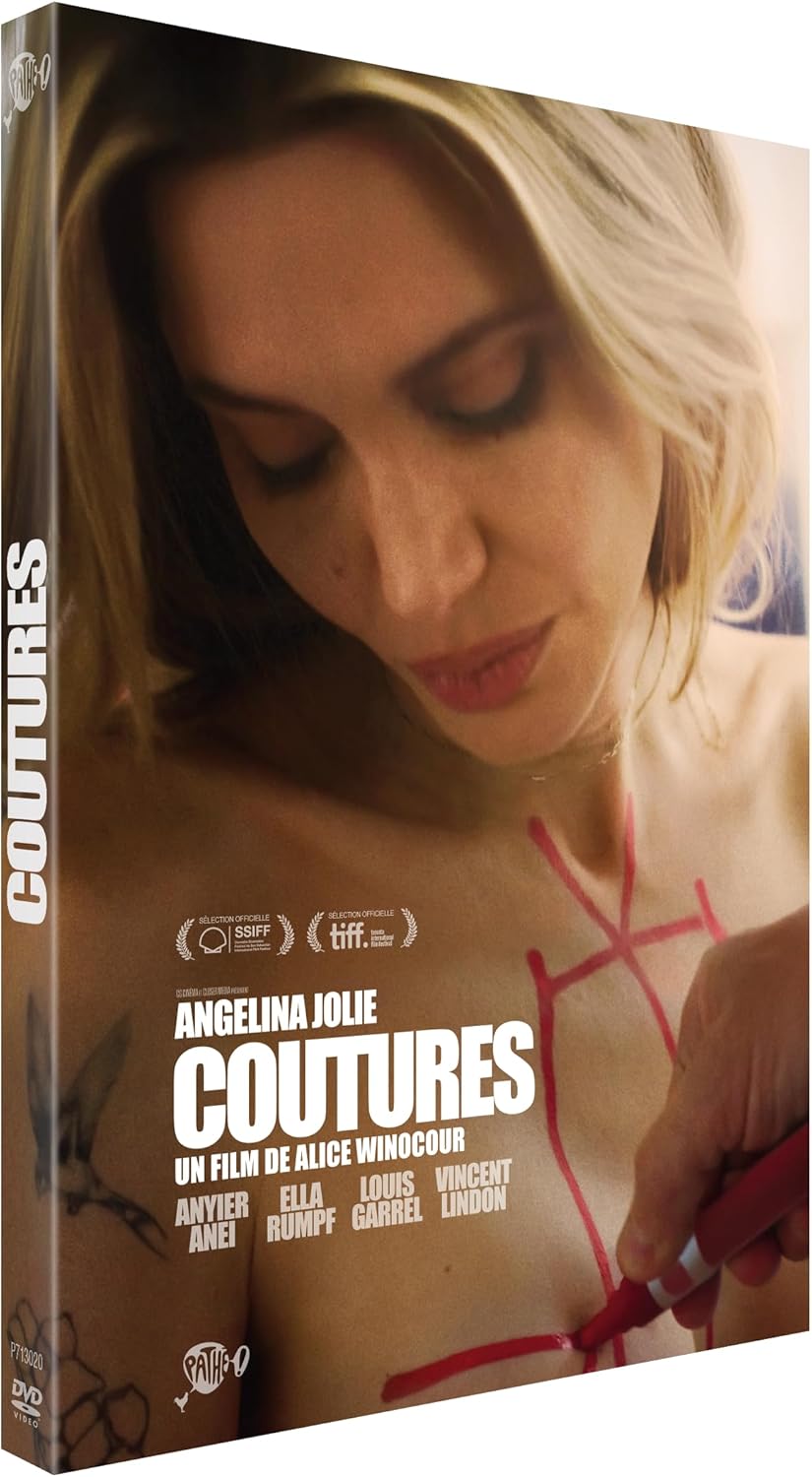
Récemment, un de ses amis : Jonnhy Depp, avait déclaré vouloir quitter le pays pour éviter de payer trop d’impôts. Une chose que la comédienne ne comprend toujours pas : « Il quitte la France ? Je ne le savais pas. Il aime tant votre pays que ça m’étonne. Je suis comme lui. Je serai toujours amoureuse de la France et des Français. Nous n’avons jamais parlé de ça ensemble, mais j’ai l’intention de rester.” a t’elle déclaré. En plus d’aimer notre cher pays, Angelina Jolie aurait même avoué qu’elle apprend notre langue ! Et même si selon elle son français est loin d’être parfait, elle avoue qu’elle essaie quand même : « C’est mon fils qui m’apprend votre langue, car je voyage tellement ces derniers temps que je n’ai pas le temps de pratiquer en France. » a t’elle ajouté. Très taquine, l’actrice ne s’empêche pas de tacler son compagnon Brad Pitt en avouant qu’elle parle mieux que lui le français ! Il ne fait aucun doute que les acteurs Brad Pitt et Angelina Jolie sont heureux dans notre pays… Et oui, il y a quelques jours ceux-ci ont vendu leur maison de Malibu à l’animatrice Ellen DeGeneres. Une immense joie pour le bellâtre qui vient tout juste de souhaiter ses 48 ans et qui avec cette vente, empoche plus de 12 millions de dollars… Cette demeure était assez symbolique pour lui puisqu’il l’avait acheté lors de sa rencontre avec Angie. Une maison immense, composée de : quatre chambres, quatre salles de bain, une cuisine refaite à neuf, une terrasse en bambou, un court de tennis et une piscine, ainsi que des baies vitrées avec vue sur la côte… Bien sûr, celle-ci fait partie d’une grande collection de maisons que le couple a acheté au fur et à mesure des années. Ainsi en plus de s’être installés en France, les amoureux ont investi : Los Angeles, Santa Barbara, la Nouvelle-Orléans et le Cambodge. Qui a dit que la vie des Brandgelina était difficile ?!
 |

My Medical Choice
- Détails
- Publié le mardi 14 mai 2013 06:41
- Écrit par Angelina Jolie
MY MOTHER fought cancer for almost a decade and died at 56. She held out long enough to meet the first of her grandchildren and to hold them in her arms. But my other children will never have the chance to know her and experience how loving and gracious she was.
We often speak of “Mommy’s mommy,” and I find myself trying to explain the illness that took her away from us. They have asked if the same could happen to me. I have always told them not to worry, but the truth is I carry a “faulty” gene, BRCA1, which sharply increases my risk of developing breast cancer and ovarian cancer.
My doctors estimated that I had an 87 percent risk of breast cancer and a 50 percent risk of ovarian cancer, although the risk is different in the case of each woman.
Only a fraction of breast cancers result from an inherited gene mutation. Those with a defect in BRCA1 have a 65 percent risk of getting it, on average.
Once I knew that this was my reality, I decided to be proactive and to minimize the risk as much I could. I made a decision to have a preventive double mastectomy. I started with the breasts, as my risk of breast cancer is higher than my risk of ovarian cancer, and the surgery is more complex.
On April 27, I finished the three months of medical procedures that the mastectomies involved. During that time I have been able to keep this private and to carry on with my work.
But I am writing about it now because I hope that other women can benefit from my experience. Cancer is still a word that strikes fear into people’s hearts, producing a deep sense of powerlessness. But today it is possible to find out through a blood test whether you are highly susceptible to breast and ovarian cancer, and then take action.
My own process began on Feb. 2 with a procedure known as a “nipple delay,” which rules out disease in the breast ducts behind the nipple and draws extra blood flow to the area. This causes some pain and a lot of bruising, but it increases the chance of saving the nipple.
Two weeks later I had the major surgery, where the breast tissue is removed and temporary fillers are put in place. The operation can take eight hours. You wake up with drain tubes and expanders in your breasts. It does feel like a scene out of a science-fiction film. But days after surgery you can be back to a normal life.
Nine weeks later, the final surgery is completed with the reconstruction of the breasts with an implant. There have been many advances in this procedure in the last few years, and the results can be beautiful.
I wanted to write this to tell other women that the decision to have a mastectomy was not easy. But it is one I am very happy that I made. My chances of developing breast cancer have dropped from 87 percent to under 5 percent. I can tell my children that they don’t need to fear they will lose me to breast cancer.
It is reassuring that they see nothing that makes them uncomfortable. They can see my small scars and that’s it. Everything else is just Mommy, the same as she always was. And they know that I love them and will do anything to be with them as long as I can. On a personal note, I do not feel any less of a woman. I feel empowered that I made a strong choice that in no way diminishes my femininity.
I am fortunate to have a partner, Brad Pitt, who is so loving and supportive. So to anyone who has a wife or girlfriend going through this, know that you are a very important part of the transition. Brad was at the Pink Lotus Breast Center, where I was treated, for every minute of the surgeries. We managed to find moments to laugh together. We knew this was the right thing to do for our family and that it would bring us closer. And it has.
For any woman reading this, I hope it helps you to know you have options. I want to encourage every woman, especially if you have a family history of breast or ovarian cancer, to seek out the information and medical experts who can help you through this aspect of your life, and to make your own informed choices.
I acknowledge that there are many wonderful holistic doctors working on alternatives to surgery. My own regimen will be posted in due course on the Web site of the Pink Lotus Breast Center. I hope that this will be helpful to other women.
Breast cancer alone kills some 458,000 people each year, according to the World Health Organization, mainly in low- and middle-income countries. It has got to be a priority to ensure that more women can access gene testing and lifesaving preventive treatment, whatever their means and background, wherever they live. The cost of testing for BRCA1 and BRCA2, at more than $3,000 in the United States, remains an obstacle for many women.
I choose not to keep my story private because there are many women who do not know that they might be living under the shadow of cancer. It is my hope that they, too, will be able to get gene tested, and that if they have a high risk they, too, will know that they have strong options.
Life comes with many challenges. The ones that should not scare us are the ones we can take on and take control of.
Angelina Jolie is an actress and director.
(source)
A New Level of Refugee Suffering
- Détails
- Publié le mercredi 28 janvier 2015 05:36
- Écrit par Angelina Jolie
A New Level of Refugee Suffering
Angelina Jolie on the Syrians and Iraqis Who Can’t Go Home
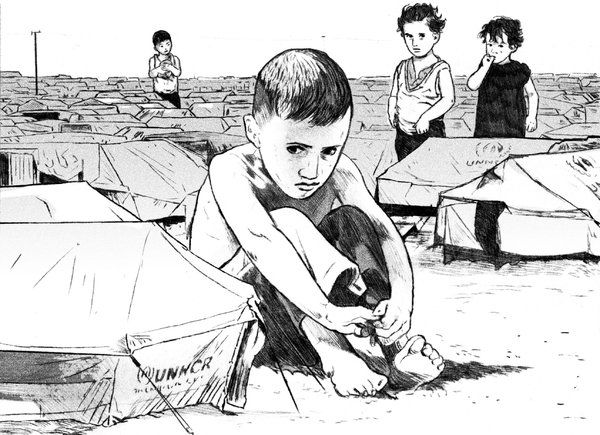
KHANKE, Iraq — I HAVE visited Iraq five times since 2007, and I have seen nothing like the suffering I’m witnessing now.
I came to visit the camps and informal settlements where displaced Iraqis and Syrian refugees are desperately seeking shelter from the fighting that has convulsed their region.
In almost four years of war, nearly half of Syria’s population of 23 million people has been uprooted. Within Iraq itself, more than two million people have fled conflict and the terror unleashed by extremist groups. These refugees and displaced people have witnessed unspeakable brutality. Their children are out of school, they are struggling to survive, and they are surrounded on all sides by violence.
For many years I have visited camps, and every time, I sit in a tent and hear stories. I try my best to give support. To say something that will show solidarity and give some kind of thoughtful guidance. On this trip I was speechless.
What do you say to a mother with tears streaming down her face who says her daughter is in the hands of the Islamic State, or ISIS, and that she wishes she were there, too? Even if she had to be raped and tortured, she says, it would be better than not being with her daughter.
What do you say to the 13-year-old girl who describes the warehouses where she and the others lived and would be pulled out, three at a time, to be raped by the men? When her brother found out, he killed himself.
How can you speak when a woman your own age looks you in the eye and tells you that her whole family was killed in front of her, and that she now lives alone in a tent and has minimal food rations?
In the next tent, I met a family of eight children. No parents. Father killed. Mother missing, most likely taken. The 19-year-old boy is the sole breadwinner. When I comment that it is a lot of responsibility for his age, he just smiles and puts his arm around his young sister. He tells me he is grateful he has the opportunity to work and help them. He means it. He and his family are the hope for the future. They are resilient against impossible odds.
Nothing prepares you for the reality of so much individual human misery: for the stories of suffering and death, and the gaze of hungry, traumatized children.
Who can blame them for thinking that we have given up on them? Only a fraction of the humanitarian aid they need is being provided. There has been no progress on ending the war in Syria since the Geneva process collapsed 12 months ago. Syria is in flames, and areas of Iraq are gripped by fighting. The doors of many nations are bolted against them. There is nowhere they can turn.
Ms. Jolie is obviously a very good person and a credit to her profession. She is also a very (very) famous person who is widely respected...
"There is a great temptation to turn inward, to focus on our own troubles."We played a big role in making these troubles. We destroyed Iraq...
I can't see a viable solution without massive US military involvement. And maybe that is the answer considering we helped create the mess....
Syria’s neighbors have taken in nearly four million Syrian refugees, but they are reaching their limits. Syrian refugees now make up 10 percent of Jordan’s population. In Lebanon, every fourth person is now a Syrian. They need food, shelter, education, health care and work. This means fewer resources available for local people. Far wealthier countries might crack under these pressures.
Stories of terror, barrel bombs and massacres have acquired an awful familiarity. There is a great temptation to turn inward, to focus on our own troubles.
But the plain fact is we cannot insulate ourselves against this crisis. The spread of extremism, the surge in foreign fighters, the threat of new terrorism — only an end to the war in Syria will begin to turn the tide on these problems. Without that, we are just tinkering at the edges.
At stake are not only the lives of millions of people and the future of the Middle East, but also the credibility of the international system. What does it say about our commitment to human rights and accountability that we seem to tolerate crimes against humanity happening in Syria and Iraq on a daily basis?
When the United Nations refugee agency was created after World War II, it was intended to help people return to their homes after conflict. It wasn’t created to feed, year after year, people who may never go home, whose children will be born stateless, and whose countries may never see peace. But that is the situation today, with 51 million refugees, asylum-seekers or displaced people worldwide, more than at any time in the organization’s history.
Much more assistance must be found to help Syria’s neighbors bear the unsustainable burden of millions of refugees. The United Nations’ humanitarian appeals are significantly underfunded. Countries outside the region should offer sanctuary to the most vulnerable refugees in need of resettlement — for example, those who have experienced rape or torture. And above all, the international community as a whole has to find a path to a peace settlement. It is not enough to defend our values at home, in our newspapers and in our institutions. We also have to defend them in the refugee camps of the Middle East, and the ruined ghost towns of Syria.
Angelina Jolie is a filmmaker, special envoy of the United Nations High Commissioner for Refugees and co-founder of the Preventing Sexual Violence Initiative.
A version of this op-ed appears in print on January 28, 2015, on page A23 of the New York edition with the headline: A New Level of Refugee Suffering.
Angelina Jolie Pitt: Diary of a Surgery
- Détails
- Publié le mardi 24 mars 2015 00:00
- Écrit par Angelina Jolie
TWO years ago I wrote about my choice to have a preventive double mastectomy. A simple blood test had revealed that I carried a mutation in the BRCA1 gene. It gave me an estimated 87 percent risk of breast cancer and a 50 percent risk of ovarian cancer. I lost my mother, grandmother and aunt to cancer.
I wanted other women at risk to know about the options. I promised to follow up with any information that could be useful, including about my next preventive surgery, the removal of my ovaries and fallopian tubes.
I had been planning this for some time. It is a less complex surgery than the mastectomy, but its effects are more severe. It puts a woman into forced menopause. So I was readying myself physically and emotionally, discussing options with doctors, researching alternative medicine, and mapping my hormones for estrogen or progesterone replacement. But I felt I still had months to make the date.
Then two weeks ago I got a call from my doctor with blood-test results. “Your CA-125 is normal,” he said. I breathed a sigh of relief. That test measures the amount of the protein CA-125 in the blood, and is used to monitor ovarian cancer. I have it every year because of my family history.
But that wasn’t all. He went on. “There are a number of inflammatory markers that are elevated, and taken together they could be a sign of early cancer.” I took a pause. “CA-125 has a 50 to 75 percent chance of missing ovarian cancer at early stages,” he said. He wanted me to see the surgeon immediately to check my ovaries.
I went through what I imagine thousands of other women have felt. I told myself to stay calm, to be strong, and that I had no reason to think I wouldn’t live to see my children grow up and to meet my grandchildren.
I called my husband in France, who was on a plane within hours. The beautiful thing about such moments in life is that there is so much clarity. You know what you live for and what matters. It is polarizing, and it is peaceful.
That same day I went to see the surgeon, who had treated my mother. I last saw her the day my mother passed away, and she teared up when she saw me: “You look just like her.” I broke down. But we smiled at each other and agreed we were there to deal with any problem, so “let’s get on with it.”
Nothing in the examination or ultrasound was concerning. I was relieved that if it was cancer, it was most likely in the early stages. If it was somewhere else in my body, I would know in five days. I passed those five days in a haze, attending my children’s soccer game, and working to stay calm and focused.
The day of the results came. The PET/CT scan looked clear, and the tumor test was negative. I was full of happiness, although the radioactive tracer meant I couldn’t hug my children. There was still a chance of early stage cancer, but that was minor compared with a full-blown tumor. To my relief, I still had the option of removing my ovaries and fallopian tubes and I chose to do it.
I did not do this solely because I carry the BRCA1 gene mutation, and I want other women to hear this. A positive BRCA test does not mean a leap to surgery. I have spoken to many doctors, surgeons and naturopaths. There are other options. Some women take birth control pills or rely on alternative medicines combined with frequent checks. There is more than one way to deal with any health issue. The most important thing is to learn about the options and choose what is right for you personally.
In my case, the Eastern and Western doctors I met agreed that surgery to remove my tubes and ovaries was the best option, because on top of the BRCA gene, three women in my family have died from cancer. My doctors indicated I should have preventive surgery about a decade before the earliest onset of cancer in my female relatives. My mother’s ovarian cancer was diagnosed when she was 49. I’m 39.
Last week, I had the procedure: a laparoscopic bilateral salpingo-oophorectomy. There was a small benign tumor on one ovary, but no signs of cancer in any of the tissues.
I have a little clear patch that contains bio-identical estrogen. A progesterone IUD was inserted in my uterus. It will help me maintain a hormonal balance, but more important it will help prevent uterine cancer. I chose to keep my uterus because cancer in that location is not part of my family history.
It is not possible to remove all risk, and the fact is I remain prone to cancer. I will look for natural ways to strengthen my immune system. I feel feminine, and grounded in the choices I am making for myself and my family. I know my children will never have to say, “Mom died of ovarian cancer.”
Regardless of the hormone replacements I’m taking, I am now in menopause. I will not be able to have any more children, and I expect some physical changes. But I feel at ease with whatever will come, not because I am strong but because this is a part of life. It is nothing to be feared.
I feel deeply for women for whom this moment comes very early in life, before they have had their children. Their situation is far harder than mine. I inquired and found out that there are options for women to remove their fallopian tubes but keep their ovaries, and so retain the ability to bear children and not go into menopause. I hope they can be aware of that.
It is not easy to make these decisions. But it is possible to take control and tackle head-on any health issue. You can seek advice, learn about the options and make choices that are right for you. Knowledge is power.
source : New York Times
What We Owe Refugees
- Détails
- Publié le jeudi 20 juin 2019 05:01
- Écrit par Angelina Jolie
Who comes to mind when you picture a refugee? You probably don’t imagine a European. But if you were a child of World War II and asked your parents what a refugee was, they would probably have described someone from Europe.
More than 40 million Europeans were displaced by the war. The U.N. Refugee Agency was created for them. We forget this. Some of the leaders uttering the harshest rhetoric against refugees today trace their routes back to countries that went through tragic refugee experiences and were helped by the international community.
At the first sign of armed conflict or persecution, the natural human response is to try to take your children out of harm’s way. Threatened by bombs, mass rape or murder squads, people gather the little they can carry and seek safety. Refugees are people who’ve chosen to leave a conflict. They pull themselves and their families through war, and often help rebuild their countries. These are qualities to be admired.
Why then has the word refugee acquired such negative connotations in our times? Why are politicians being elected on promises to shut borders and turn back refugees? Today the distinction between refugees and migrants has been blurred and politicized. Refugees have been forced to flee their country because of persecution, war or violence. Migrants have chosen to move, mainly to improve their lives. Some leaders deliberately use the terms refugee and migrant interchangeably, using hostile rhetoric that whips up fear against all outsiders.
Everyone deserves dignity and fair treatment, but we need to be clear about the distinction. Under international law it is not an option to assist refugees, it is an obligation. It is perfectly possible to ensure strong border control and fair, humane immigration policies while meeting our responsibility to help refugees. More than half of all refugees worldwide are children, and 4 of 5 of them live in a country that borders the conflict or crisis they have fled. Fewer than 1% of refugees are ever permanently resettled, including in Western nations.
American generosity means that our country is the world’s largest donor of aid. But consider Lebanon, where every sixth person is a refugee. Or Uganda, where a third of the population lives in extreme poverty, sharing its scarce resources with over a million refugees. Across the world, many countries that have the least are doing the most.
When I started working with the U.N. Refugee Agency, or U.N. High Commissioner for Refugees (UNHCR), 18 years ago, there were about 40 million forcibly displaced people and hope that the number might be falling. According to the UNHCR’s latest global-trends report, the number of forcibly displaced people today stands at over 70 million and is rapidly rising. From Myanmar to South Sudan, we are failing to help resolve conflicts in a way that enables people to return home. And we expect the U.N. to somehow deal with the resulting human chaos.
At the first session of the U.N. General Assembly, in 1946, President Truman laid upon member states the prime responsibility for creating peace and security. He said the U.N. “cannot … fulfill adequately its own responsibilities until … peace settlements have been made and unless these settlements form a solid foundation upon which to build a permanent peace.”
But the sad truth is, member states apply the tools and standards of the U.N. selectively. States often put business and trade interests ahead of the lives of innocent people affected by conflict. We grow tired or disillusioned and turn our diplomatic effort away from countries before they’ve stabilized. We seek peace agreements, as in Afghanistan, that don’t have human rights at their core. We barely acknowledge the impact of climate change as a major factor in conflict and displacement.
We use aid as a substitute for diplomacy. But you cannot solve a war with humanitarian assistance. Particularly when few humanitarian appeals anywhere in the world are even 50% funded. The U.N. has received only 21% of the 2019 funds needed for Syria relief efforts. In Libya the figure is 15%.
The rate of displacement last year was equivalent to 37,000 people being forced from their homes every single day. Imagine trying to organize a response to that level of desperation without the funds necessary to help even half of those people.
As we mark World Refugee Day on June 20, it is an illusion to think that any country can retreat behind its borders and simply hope the problem will go away. We need leadership and effective diplomacy. We need to focus on long-term peace based on justice, rights and accountability to enable refugees to return home.
This is not a soft approach. It is the harder course of action, but it is the only one that will make a difference. The distance between us and the refugees of the past is shorter than we think.
(source)
 Share
Share

